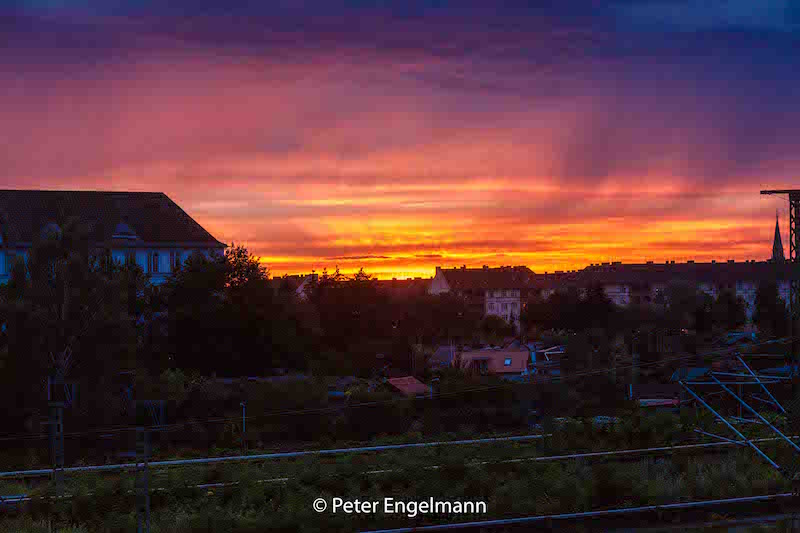
Berlin, August 1, 2017: Spectacular Evening Sky

On August 1 again a hot air mass met a cold air mass over Germany. Subsequently, there was an air mass limit. Air mass limits are often the reason for severe weather events like extreme thunderstorms with tornados and flooding or downbursts.

(A good definition what an air mass is could be found at the UK met office:http://www.metoffice.gov.uk/learning/learn-about-the-weather/how-weather-works/air-masses.)

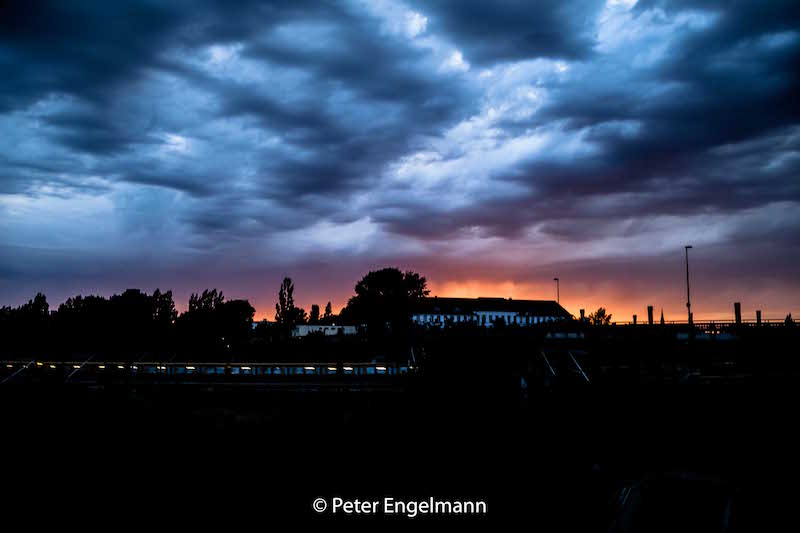
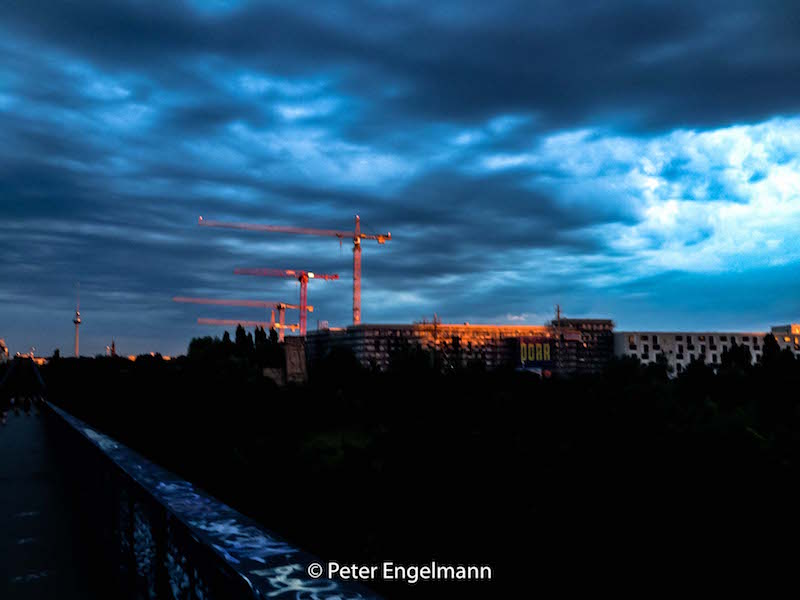
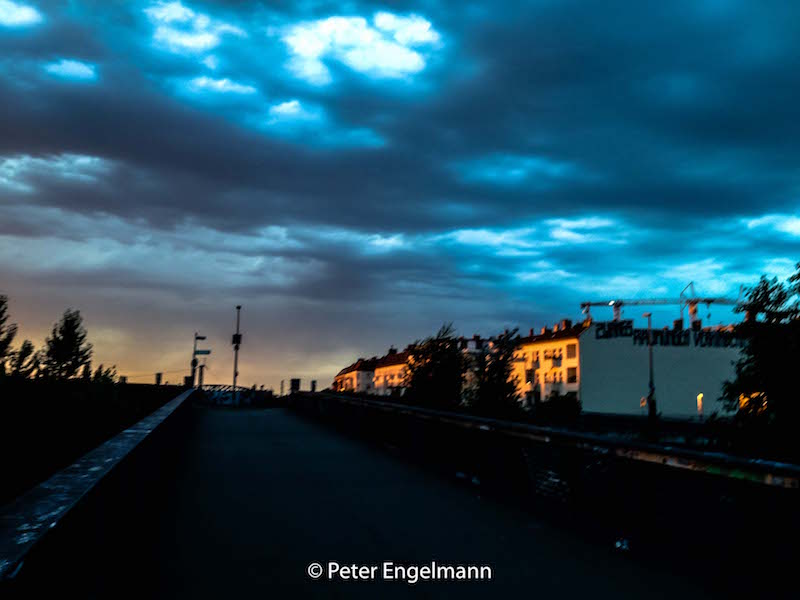
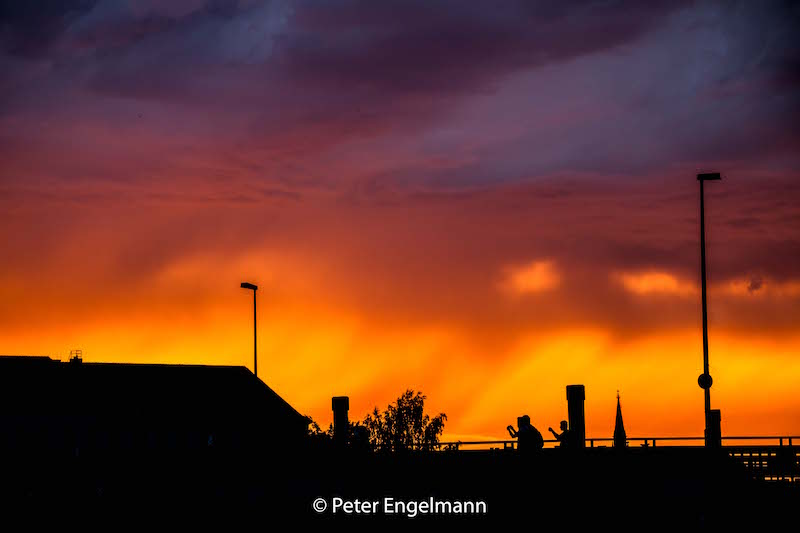
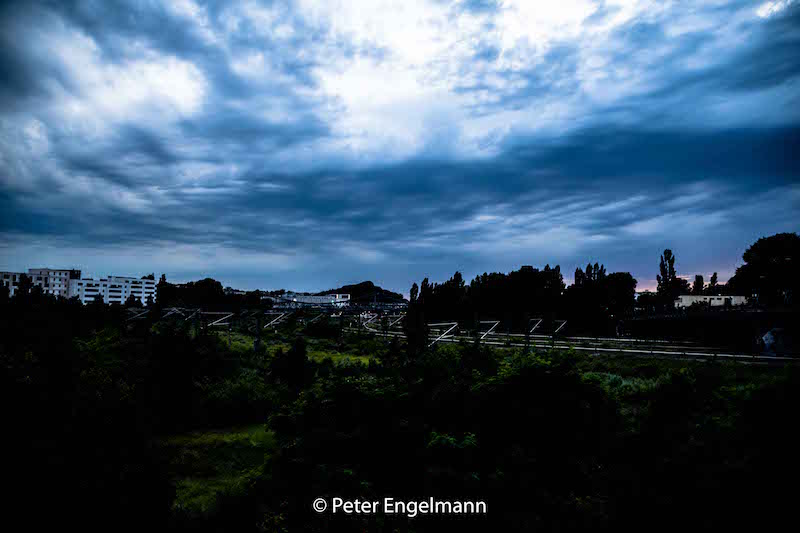
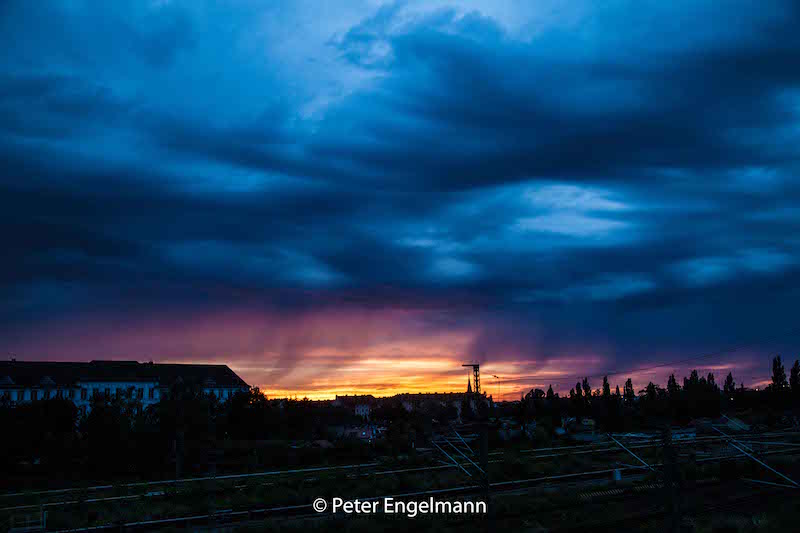
Severe storms were expected, the weather service also issued a warning for Berlin. In the afternoon and evening, a line of thunderstorms appeared. There was severe weather in Brandenburg and many other areas. However in Berlin after a short time of rain, the turbulent sky opened a bit and a red evening sun was illuminating the dramatically structured clouds.


Many people stopped and took pictures of the unusual weather situation. Of course, evening-glow happens a lot but this dramatic sky was extraordinary. One reason for this impressive sky is that if you have a weather situation with thunderstorms close or developing there is a chaos in the atmosphere. There are several levels in the lower and higher atmosphere with different clouds and there is a lot of circulation.


The impressive scenery lasted till it became dark. There was only a little wind and it was still very warm in the city during the night. Some sheet-lighting could be seen later but the bigger storms happened more in the South.

It was a relief after two severe storms with extraordinary flooding hit the city two times before.

But summer 2017 is very unpredictable in Europe. Two days later a very strong cell did damage in the South of Berlin and later in August Austria suffered from storms with heavy rain followed by mud-slides.

On the south-side of the Alps in Italy there are still heat-waves. As mentioned before these weather-patterns fit in the scenarios developed by scientists about effects of climate change.


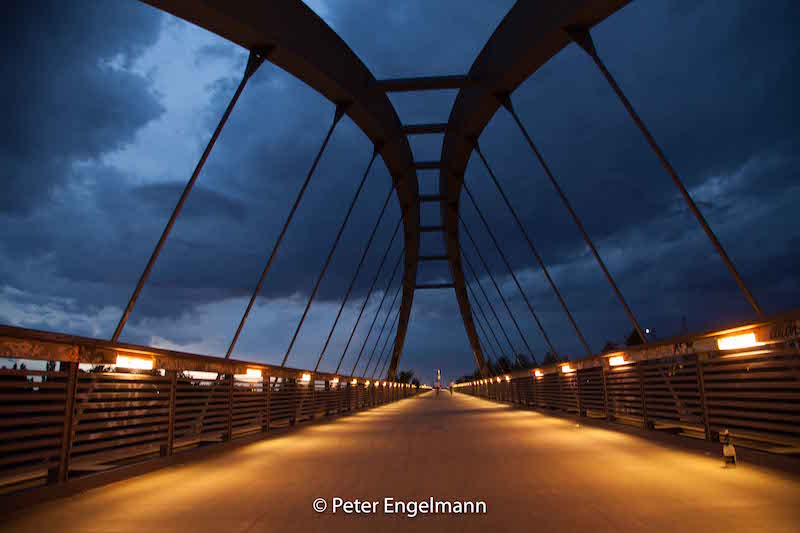
There is a good-viewpoint between railway station “Gesundbrunnen” in Berlin and the well-known Bornholmer Straße. The pictures below were taken from a small bridge named “Schwedter Steig”. I had seen that bridge a couple of times when using the train. Its always useful particularly if you want to do weather-pictures to have an inventory of good view-points before, since if an interesting weather pattern occurs there is no time to search for a good place with a lot of open skies to take pictures or videos.


Berlin, July 22, 2017: The Flood Again

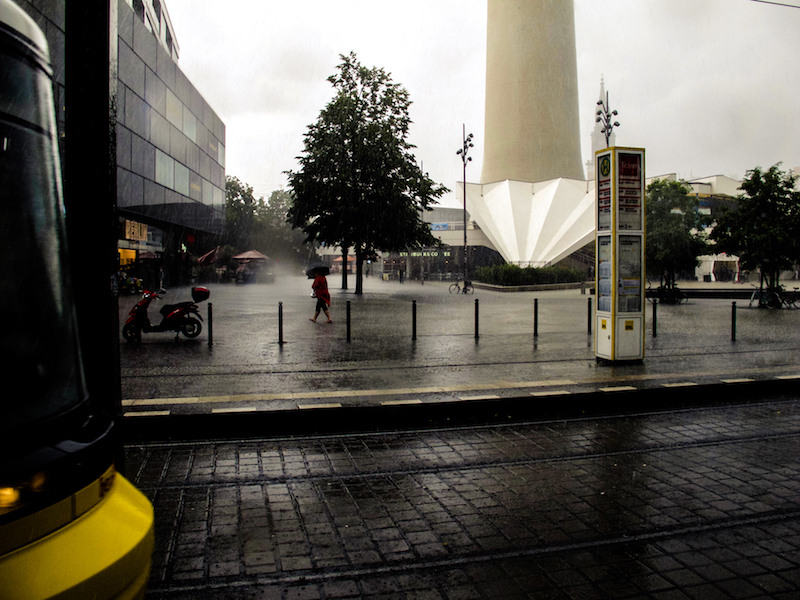
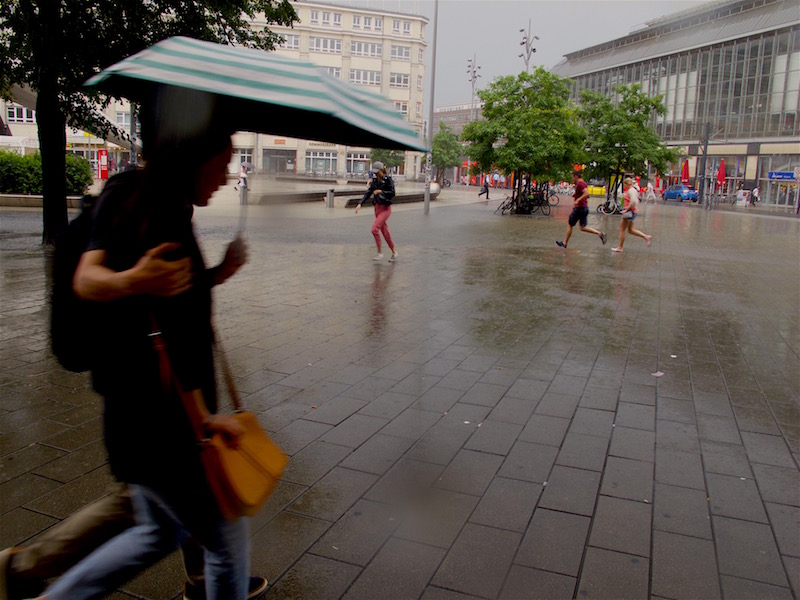
Again scenes looking like from Roland Emmerich’s “Day After Tomorrow”. Roughly three weeks after the flooding with lots of damage the German capital was again hit by severe weather. A thunderstorm and torrential rain hit the city on Saturday afternoon when many people were celebrating the Christopher-Street-Day-Parade. Luckily it didn’t affect much of the parade, but also this time there was a state of exception.

In some parts of the city particularly in the North and North-East but also in the South-West a lot of rain came down, and in Pankow, a storm left a trace of destruction. Trees fell on cars, the S-Bahn Linie 2 commuter train was interrupted in the North for some time, also the tracks of a street-car were affected.

Also again there was a lot of water on some streets turning them into canals like three weeks before. It’s noteworthy that often car drivers are obviously not conscious about the danger for their cars and perhaps also for themselves: if you drive into a puddle of water and the level of water is high enough its possible the water is sucked into the air filter. Subsequently, the engine could be completely destroyed. Cars could also become deadly traps if the car is drowning in a flooded underpass and the doors cannot any longer be opened.

If possible try to avoid driving when these type of flash-floods occur which are a novelty in Germany with this kind of intense rain and also the fact that we have now repeated events of that kind in shorter time-periods during summer.
<


It certainly looks like one of the predicted effects of climate change; for a long time, scientists warned of higher levels of moist air in the atmosphere during summertime. These wet air masses can lead to more extreme weather like heavy thunderstorms and extreme rain.

Obviously, it’s not yet possible to have a more precise forecast or nowcast about thunderstorms with extreme flooding. Forecasts were very precise this day about the time when the bad weather was supposed to arrive around 3-4pm in the afternoon, and there was also a warning about heavy rain, but it’s, of course, impossible to say where exactly the most extreme events do happen.

For example, the south-west of Berlin is usually less affected by severe thunderstorms as the North but there are exceptions from the rule. This time an underpass in Zehlendorf (South-West) got flooded. During the last event, the biggest mass of rain hit quarters in the west (Wilmersdorf) and a city north of Berlin, Oranienburg, where thunderstorms are more often.

Luckily the rain didn’t last as long as two weeks ago. Therefore it was another extreme day for police and fire-starters but it should be less damage as during the previous extreme weather event.